The Essence of a Soul-Healing Dorama Novel Romance
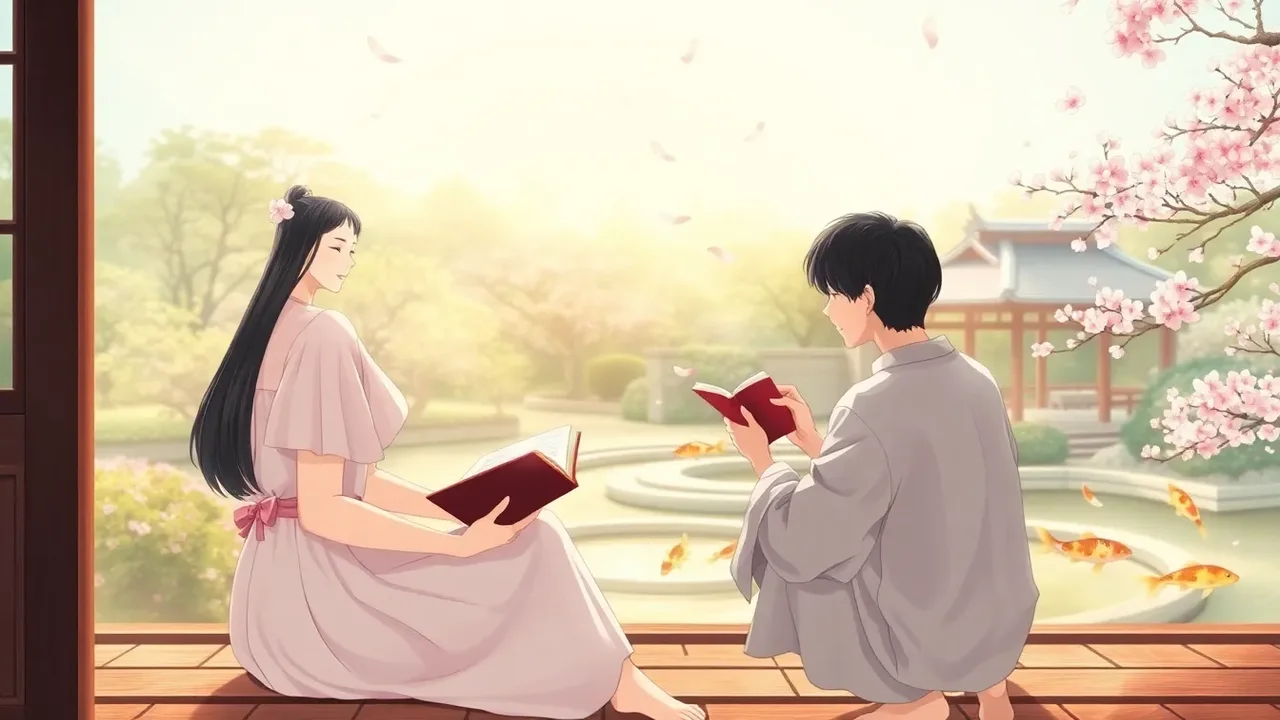
A dorama novel romance that heals your soul is not just a story about love; it is a carefully constructed narrative that uses the tropes of Japanese, Korean, or Chinese television dramas (doramas) and translates them into the intimate, immersive medium of a novel. Unlike fast-paced thrillers or high-stakes fantasy, these romances prioritize emotional depth, gentle conflict resolution, and the gradual mending of broken hearts. They often feature protagonists who are emotionally wounded, socially isolated, or burdened by past trauma. The romance develops slowly, with every glance, every shared meal, and every quiet conversation acting as a stitch in the fabric of their recovery. Readers turn to these novels for solace, for a safe space where kindness and understanding eventually overcome cynicism and pain. The healing arises from the assurance that love can be patient, that vulnerability is not weakness, and that even the most damaged soul deserves a second chance to bloom.
Key Elements That Foster Healing
Several narrative components work together to create the healing effect. First, the slow-burn romance allows readers to experience the characters' emotional growth in real time. There is no instant attraction or convenient plot device that solves all problems. Instead, the connection builds through shared vulnerability. Second, the setting often plays a therapeutic role—a quiet seaside town, a cozy bookstore, a rural village, or a traditional inn. These environments remove the characters from the noise of modern life and give them space to heal. Third, secondary characters act as catalysts for growth: a wise grandmother who dispenses gentle advice, a childhood friend who offers unconditional support, or a rival who becomes a friend. Fourth, the resolution is earned rather than given. Obstacles are overcome through communication, self-reflection, and small acts of courage. Finally, the narrative voice itself is tender, descriptive, and filled with inner monologues that help readers process their own emotions.
Character Archetypes in Healing Dorama Romances
While each story is unique, certain archetypes recur because they resonate deeply with readers seeking emotional repair. The Male Lead is often a gruff exterior hiding a soft heart—a chef, a gardener, an innkeeper, or a quiet artist. He may be recovering from his own loss or simply shy. The Female Lead is frequently a city professional who has burned out or experienced a betrayal, leading her to retreat to a slower pace. Their interactions are marked by misunderstandings that are resolved not through dramatic fights, but through thoughtful conversations. A third character, the Wise Mentor (often elderly), provides emotional guidance without interfering. Below is a table summarizing common archetypes and the healing they represent:
| Archetype | Role in Healing | Example Trait |
|---|---|---|
| The Gentle Caregiver | Provides consistent, unconditional support | Always remembers the protagonist's tea order |
| The Wounded Healer | Shares similar pain, creating deep empathy | Has a visible scar or hidden trauma |
| The Quiet Observer | Notices subtle emotional shifts | Reads the protagonist's moods without words |
| The Sunshine Friend | Brings light and laughter | Organizes impromptu picnics or village festivals |
Plot Devices That Promote Emotional Healing
Dorama novel romances use a distinct set of plot devices that are gentle yet impactful. One common device is the shared mission: the protagonists must work together to save a community garden, restore an old library, or organize a traditional festival. This collaboration forces them to rely on each other and see beyond first impressions. Another device is the daily ritual—meeting every morning at a café, walking the same path, or sharing evening tea. These rituals create a rhythm that mirrors the slow, steady pace of recovery. A third device is the letter or journal discovered from the past, which reveals hidden emotions or family secrets. This allows characters to confront unresolved grief without direct confrontation. The storm or crisis is also used, but in a healing context—a typhoon, a minor accident, or a financial setback—that forces the protagonists to put aside pride and ask for help. Each crisis is resolved with mutual support, reinforcing the message that vulnerability leads to stronger bonds.
Examples of Soul-Healing Moments
To illustrate, consider a scene where the male lead, a quiet potter, finds the female lead crying in his studio after she learns of a corporate betrayal. Instead of asking questions, he simply hands her a piece of unglazed clay and shows her how to center it on the wheel. The physical act of molding the clay becomes a metaphor for reshaping her life. Later, when the mug she made cracks in the kiln, he tells her, 'Kintsugi makes it beautiful—gold joins the broken pieces.' That simple line can heal a reader's own feelings of being broken. Another example comes from a story set in a small tea plantation. The female lead, exhausted from her corporate life, learns the slow ceremony of matcha preparation from the elderly owner. The repetitive motions, the attention to detail, the quiet—all serve to calm her racing mind. When the male lead, a farmer, joins her for tea, they share a silence that is more intimate than any conversation. These moments are the heart of the genre.
Practical Information for Readers and Writers
For readers seeking soul-healing dorama novel romances, look for keywords such as 'slow burn,' 'small town,' 'healing journey,' 'emotional growth,' 'found family,' and 'second chance.' These are often found in the romance or women's fiction sections. Many authors write them as part of a series, but standalones are common too. Libraries and online retailers categorize them under 'Contemporary Romance' or 'Romance with a Touch of Drama.' For writers, the key is to focus on internal conflict over external action. Dialogues should be rich with subtext, and descriptions should appeal to all senses—the scent of rain on earth, the texture of worn wood, the sound of wind chimes. Each chapter should advance the emotional arc, not just the plot. A useful list of techniques includes:
- Use weather to mirror emotions: gentle rain for melancholy, clearing skies for hope.
- Incorporate traditional crafts or rituals: pottery, tea ceremony, calligraphy, farming—activities that require patience and mindfulness.
- Develop side characters with their own mini-healing arcs: a widow learning to laugh again, a child overcoming shyness.
- End each chapter with a quiet, resonant line that feels like a small comfort.
- Include moments of humor that feel natural—a dog stealing a shoe, a cooking disaster—to prevent the story from becoming overly sentimental.
Emotional Resonance and Reader Impact
Readers of these novels often report feeling calmer, more hopeful, and more in tune with their own emotions after reading. The genre provides a form of gentle therapy: it validates pain without dwelling on it, and it offers a vision of love that is not based on passion alone but on steady presence. Many readers use these books as a form of self-care, much like watching a favorite dorama after a stressful day. The structure of the novel—with its slow pace, detailed descriptions, and emotional payoffs—creates a meditative reading experience. Some critics argue that the genre is too idealistic, but its power lies in its ability to offer a blueprint for healing that readers can apply to their own lives. The message is simple and profound: you do not have to be perfect to be loved; you only have to be willing to try again.
How to Choose a Soul-Healing Dorama Novel Romance
With many options available, selecting a novel that truly soothes your soul can be guided by a few criteria. Consider the setting: Do you prefer coastal, mountain, or urban? The tone of the book: Some are more melancholic, others more uplifting. The occupation of the male lead: Gentlemen farmers, bookshop owners, and craftsmen are common in healing romances. The length: Longer books often allow for deeper emotional buildup. Below is a list of questions to ask before picking a title:
- Does the blurb mention 'healing,' 'fresh start,' or 'second chance'?
- Are the reviews praising the emotional depth and slow pace?
- Is there a focus on nature, traditional culture, or mindfulness?
- Do the sample pages contain more internal monologue than action?
- Is the conflict primarily internal (fear of trust, grief) rather than external (villain, crime)?
If the answer to most is 'yes,' you have likely found a soul-healing novel. Many readers also enjoy series that follow a group of friends in a small town, where each book focuses on a different character's journey. The cumulative effect of reading the entire series can be deeply comforting, as the community itself becomes a character that offers stability and warmth.
The Role of Japanese and Korean Cultural Elements
Dorama novel romances often draw heavily from Japanese and Korean cultural aesthetics, such as wabi-sabi (beauty in imperfection), omotenashi (wholehearted hospitality), and jeong (Korean concept of deep emotional connection). These cultural threads enrich the story with layers of meaning. For instance, the concept of wabi-sabi teaches that cracks and flaws are not to be hidden but honored—a powerful message for souls in need of healing. The detailed depiction of food preparation, seasonal festivals, and polite speech patterns also immerses the reader in a world where every action is intentional. This mindfulness transfers to the reader, encouraging them to slow down and appreciate small joys. The novels often include glossaries or author notes explaining these concepts, making them accessible to a global audience.
Final Considerations for a Healing Reading Experience
To maximize the therapeutic effect, read these novels in a quiet environment, perhaps with a cup of tea or coffee. Allow yourself to pause after a particularly moving scene and reflect. Many readers find it helpful to journal about the emotions that arise while reading. The goal is not to escape reality but to return to it with a lighter heart. A soul-healing dorama novel romance reminds us that love, like a well-tended garden, grows slowly and requires patience, but the flowers it produces are worth every moment of care. Whether you are a long-time fan or new to the genre, these stories offer a safe harbor in a stormy world.
FAQ - A Dorama Novel Romance That Heals Your Soul
What makes a dorama novel romance 'soul-healing'?
A soul-healing dorama novel romance focuses on emotional recovery, slow-burn relationships, and gentle conflict resolution. It prioritizes inner growth, small acts of kindness, and settings that promote peace, such as rural villages or traditional homes. The narrative avoids extreme drama and instead offers a safe, comforting space where characters and readers alike can process their emotions.
How is a dorama novel romance different from a typical romance novel?
Typical romance novels often center on passion, external obstacles, and fast-paced plot twists. Dorama novel romances, inspired by Asian television dramas, emphasize atmosphere, cultural rituals (like tea ceremonies or craft), and the gradual mending of wounded souls. The romantic development is patient, with a strong focus on emotional intimacy and everyday moments that build trust.
Can men enjoy these novels, or are they only for women?
Absolutely, men can enjoy them. The themes of healing, vulnerability, and finding peace are universal. Many male readers appreciate the thoughtful character development, the cultural depth, and the non-traditional representations of masculinity—such as male leads who are gentle, introspective artists or caregivers.
Where can I find recommendations for the best soul-healing dorama novel romances?
Online communities like Reddit's r/romancebooks, Goodreads lists tagged 'slow burn romance' and 'healing romance', and blogs dedicated to Asian fiction often provide curated recommendations. Search for terms like 'Japanese romance novel healing', 'Korean dorama style novel', or 'cozy romance with emotional depth' to find hidden gems.
Are there any specific authors known for writing this subgenre?
Yes, though the genre spans many cultures. Authors like Toshikazu Kawaguchi (Before the Coffee Gets Cold series) infuse magical realism with deep emotional healing. Others like Keigo Higashino (though more mystery) write slice-of-life relationships. In the English-language market, authors such as Sarah Pekkanen or Jenny Colgan sometimes incorporate dorama-inspired slow-burn elements. It's a growing niche.
How long should a typical soul-healing dorama novel romance be?
They often range from 250 to 400 pages, allowing enough space for the emotional development and atmospheric world-building. Shorter novellas can also work if the focus is tightly on a single healing arc. However, longer books are favored because they give readers time to bond with the characters and immerse themselves in the soothing rhythm of the story.
A dorama novel romance that heals your soul is a slow-burn, emotionally rich story inspired by Asian television dramas, focusing on characters overcoming past wounds through gentle love, cultural rituals, and peaceful settings. These narratives prioritize emotional growth, internal conflict resolution, and the therapeutic power of patience and vulnerability, offering readers a comforting escape and a blueprint for healing.
In a world that often rushes, a dorama novel romance that heals your soul is a gentle reminder that love doesn't have to be loud or dramatic to be transformative. It teaches us that the most profound connections are built through shared silences, small kindnesses, and the courage to be imperfect. Whether you are seeking comfort after loss, inspiration for a slower life, or simply a story that feels like a warm embrace, these novels offer a sanctuary for the heart. Let them be your quiet companion on the journey toward wholeness.