The Weight of Unresolved Grief: Jang Man-wol's Torment
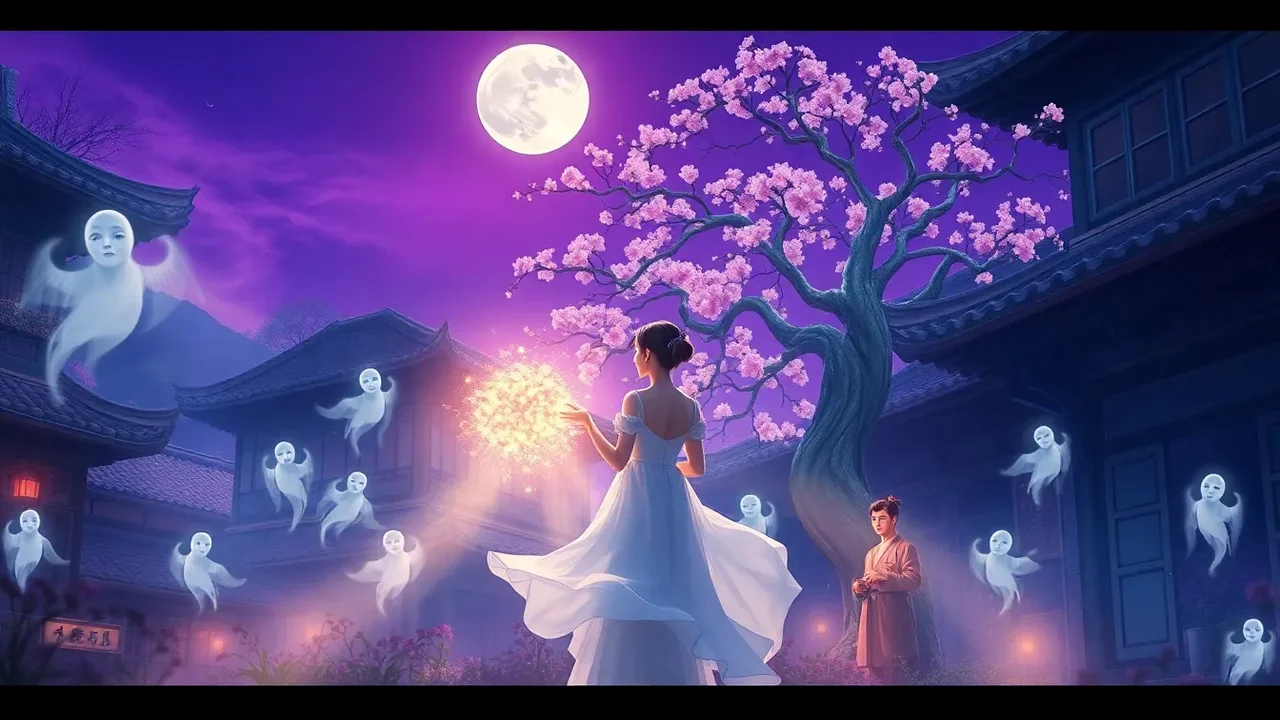
In Hotel del Luna, the character of Jang Man-wol is defined by a grief that spans over a millennium. Her inability to process the traumatic loss of her first love, Goo Chan-sung’s ancestor, and her own violent death transforms her into a vengeful, bitter soul. This grief is not a fleeting emotion but a core identity that shapes every decision she makes. Man-wol’s grief manifests as a deep-seated anger, a need for control, and a refusal to let go of the past. She clings to the hotel as a sanctuary not only for lost souls but for her own unresolved sorrow. Her journey illustrates how unprocessed grief can stagnate a person, trapping them in a cycle of regret and bitterness. The hotel itself becomes a physical manifestation of her grief—a place where time stands still, and where the dead linger because they, like Man-wol, cannot move on. Through her interactions with the guests and her staff, we see that her grief is not just personal but infectious, affecting the entire supernatural ecosystem around her.
The Stages of Grief in Man-wol's Arc
Man-wol experiences the classic stages of grief, though not in a linear order. Denial is her first defense; she refuses to accept that her lover chose duty over her. Anger follows, consuming her for centuries. She lashes out at the living and the dead, punishing those who remind her of her pain. Bargaining appears when she tries to rewrite history through the magical abilities of the hotel. She attempts to alter the fates of guests, hoping to compensate for the loss she endured. Depression is her constant companion, hidden behind a facade of glamour and cruelty. Finally, acceptance only comes after she meets the modern Goo Chan-sung, who forces her to confront her past. The table below outlines how each stage influences her actions and relationships.
| Stage of Grief | Man-wol's Behavior | Impact on Her Journey |
|---|---|---|
| Denial | Refuses to acknowledge her lover's betrayal; creates a fantasy of revenge that masks her vulnerability. | She rejects any chance of healing, isolating herself from genuine connection. |
| Anger | Tortures debtors, kills without remorse, and lashes out at Chan-sung early in their partnership. | Her anger fuels her power but also makes her feared and lonely. |
| Bargaining | Uses her magic to manipulate fate for guests, hoping to earn some cosmic redemption. | She avoids facing her own pain by focusing on others' problems. |
| Depression | Spends long periods in her private garden, drinking alone, and reminiscing about the past. | Her depression nearly consumes her, leading to suicidal ideation. |
| Acceptance | Finally lets go of her grudge, plants a tree of memories, and chooses to move on from the hotel. | She achieves peace and transcendence, completing her character arc. |
Goo Chan-sung: Grief as a Catalyst for Growth
While Man-wol’s grief is ancient, Goo Chan-sung’s grief is fresh and deeply personal. He enters the story having lost his mother at a young age and having grown up in poverty. His grief shapes him into a perfectionist, an overachiever who tries to control every aspect of his life to avoid further loss. When he is forced to work at the Hotel del Luna, his grief becomes a bridge to understanding Man-wol. Chan-sung’s journey shows that grief can be a catalyst for empathy and maturity. Unlike Man-wol, he does not deny his pain; instead, he channels it into compassion for the hotel’s guests. His ability to listen to the dead and help them resolve their regrets stems from his own understanding of loss. For example, he helps a ghost mother reunite with her child, which mirrors his own unresolved relationship with his mother. Through this, his grief transforms from a burden into a source of strength.
The Role of Secondary Characters in Mirroring Grief
The supporting cast of Hotel del Luna also illustrates how grief shapes a character’s journey. Kim Seon-bi, the head bartender, carries grief over her failed marriage and her separation from her daughter. Her grief manifests as perpetual melancholy and a dedication to serving others, as if by helping guests move on, she can atone for her own mistakes. The hotel manager, Ji Hyun-joong, grieves a childhood friend whom he accidentally killed; this guilt fuels his loyalty to the hotel and his fear of abandonment. Even the minor characters, such as the ghost of a young bride who died on her wedding day, show how grief can fixate a soul to a single moment. Below is a list of key secondary characters and the type of grief they embody.
- Kim Seon-bi: Grief over lost motherhood and marital betrayal; leads to self-sacrifice and emotional numbness.
- Ji Hyun-joong: Survivor's guilt and grief over a friend's accidental death; manifests as obsessive duty.
- The Bride Ghost (Episode 5): Grief over her own untimely death and the loss of her future; represents fixation on a perfect moment that never was.
- Queen Heo (ancestor of a guest): Grief over losing her kingdom and her identity; becomes a vengeful spirit until she finds peace.
How Grief Drives the Plot Forward
Grief is not just a character trait in Hotel del Luna; it is the engine of the entire narrative. Every episode features a ghost with unfinished business, and nearly every case revolves around a death caused by loss, betrayal, or longing. For instance, the storyline of the ghost who was a failed poet dies because he could not bear the grief of his unrequited love. Man-wol’s own grief dictates the hotel’s rules—she punishes those who break contracts because she herself was betrayed. The climax of the series hinges on Man-wol’s grief: she must choose between holding onto her pain (and thus staying trapped in her cursed existence) or embracing the joy that Chan-sung offers. This decision is the ultimate test of whether grief will define her or she will define her grief. The series argues that grief can be a transformative force if confronted with courage and support.
Practical Insights: How Viewers Can Relate to the Grief Themes
The show offers practical lessons about handling grief. One key takeaway is that grief cannot be rushed; Man-wol took a millennium to heal. Another is that isolation worsens grief—her recovery begins only when she allows Chan-sung into her life. The hotel itself can be seen as a metaphor for the mind of a grieving person: a place where fragments of the past replay endlessly until one chooses to leave. For those dealing with loss, Hotel del Luna suggests that acknowledging the pain, seeking connection, and gradually letting go are essential steps. The series also highlights that grief is not a weakness but a testament to love. The strongest characters are those who grieve deeply yet still find the strength to move forward, such as the spirit of a mother who chooses to reincarnate to protect her child despite her sorrow. Ultimately, the show demonstrates that grief shapes a character’s journey not by destroying them, but by offering them the opportunity to rebuild themselves with greater depth and compassion.
The Symbolism of the Hotel as a Grief-Scape
The Hotel del Luna is literally a space where grief is frozen in time. Its ever-changing architecture reflects Man-wol’s emotional state: when she is angry, the hotel becomes a dark, oppressive fortress; when she is content, it becomes a warm, inviting inn. Each room holds a memory of a guest’s grief, and Man-wol’s own private garden is a cemetery of memories. This environmental storytelling reinforces how grief can dominate a person’s entire world. The magical tree that blossoms at the end symbolizes the possibility of new growth after grief. By the series conclusion, the hotel itself transforms from a prison of sorrow into a transitional space for healing, mirroring Man-wol’s internal change.
In summary, grief in Hotel del Luna is not a simple emotion but a complex force that shapes every aspect of character development, plot progression, and thematic depth. The series portrays grief as both a destructive and a redemptive power, depending on how it is handled. Through Man-wol’s millennia-long struggle, Chan-sung’s empathetic journey, and the hotel’s symbolic landscape, the show offers a profound meditation on loss and recovery. The characters’ arcs teach us that grief is not something to be overcome but something to be integrated into one’s identity, allowing for a richer, more meaningful existence. As the final episode reveals, the ultimate destination of a grief-stricken soul is not oblivion but peace earned through understanding and love.
FAQ - How Grief Shapes a Character's Journey in 'Hotel del Luna'
How does Jang Man-wol's grief differ from Goo Chan-sung's?
Man-wol's grief is ancient and unprocessed, locked in anger and denial for centuries, while Chan-sung's grief is fresh and acknowledged, leading him to develop empathy and a desire to help others with their losses.
What role does the Hotel del Luna play in symbolizing grief?
The hotel is a physical manifestation of grief itself—a place where time stops and the dead cling to unresolved sorrow. Its changing atmosphere reflects Man-wol's emotional state, and its guests represent different facets of loss and regret.
Does the show suggest that grief can be fully overcome?
No, the show suggests grief is not overcome but integrated. Characters like Man-wol move on not by forgetting but by accepting their pain and transforming it into a source of compassion, as seen in her final act of planting a tree and leaving the hotel.
How do secondary characters illustrate different grief responses?
Characters like Kim Seon-bi grieve through melancholic service, Ji Hyun-joong through guilt-driven duty, and each ghost guest shows a unique fixation—from a bride frozen on her wedding day to a poet who died of heartbreak—demonstrating that grief manifests in countless ways.
What is the significance of the magical tree in the finale?
The tree represents rebirth after prolonged grief. It blooms only when Man-wol finally accepts her past and lets go of her grudge, symbolizing that healing is possible when one chooses to nurture new life instead of holding onto decay.
Can the series be used as a therapeutic tool for understanding grief?
Yes, many viewers find the show therapeutic because it presents grief as a natural, long-term process. It validates that sadness, anger, and even rage are acceptable, and that seeking human connection is crucial for eventual peace.
In 'Hotel del Luna', grief shapes character journeys through Jang Man-wol’s unprocessed millennia-old sorrow transforming into acceptance, and Goo Chan-sung’s fresh loss evolving into empathetic growth. The hotel itself symbolizes grief’s stasis, while secondary characters showcase diverse responses. The series portrays grief as both destructive and redemptive, emphasizing that healing requires connection and gradual letting go.
In Hotel del Luna, grief is not merely an emotion but a narrative engine that propels every character toward transformation. From Man-wol’s thousand-year prison of rage to Chan-sung’s compassionate acceptance, the series illustrates that grief can either trap a soul in the past or become the very tool for liberation. The hotel’s haunting beauty and the ghosts’ poignant stories remind us that loss is universal, yet the choice to integrate that loss into a richer understanding of life remains our own. Ultimately, the show leaves us with a hopeful message: grief, when faced with courage and love, can shape a journey not into darkness but into a deeper, more luminous kind of existence.
