Color Palette and Emotional Resonance
Warm Colors
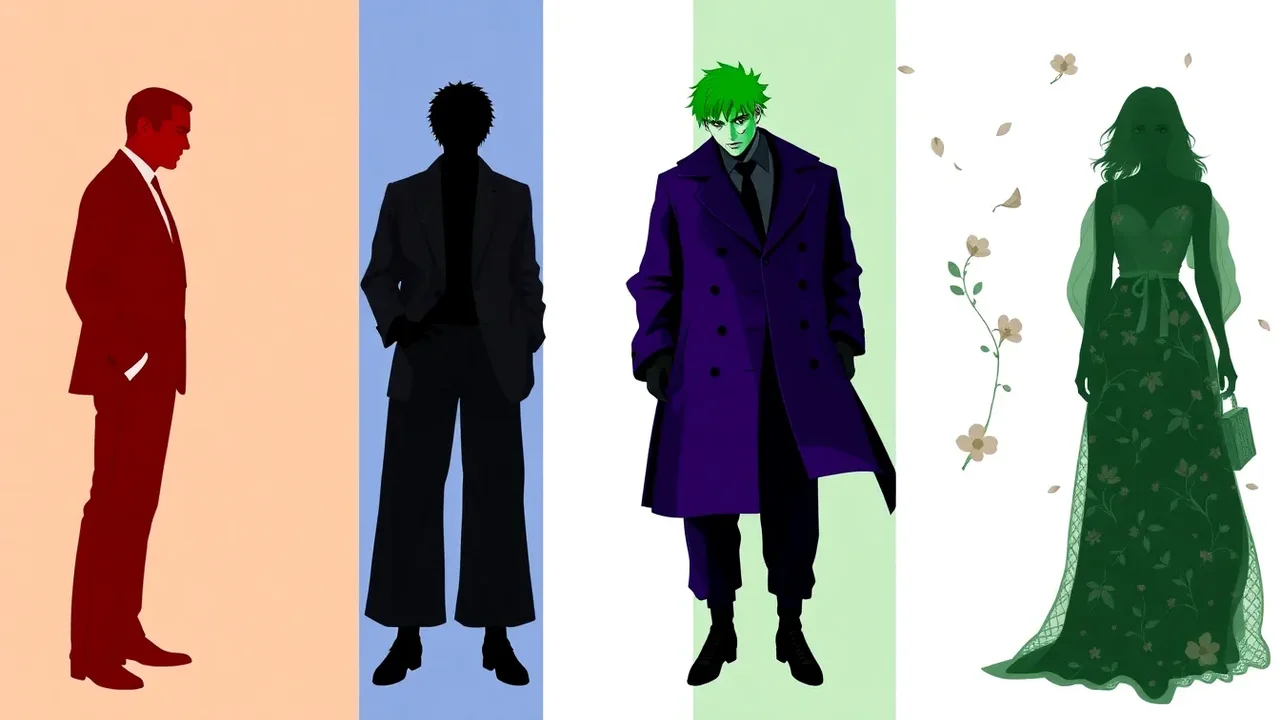
Characters who wear reds, oranges, and yellows often project confidence, passion, or danger. A villain’s crimson coat signals aggression, while a protagonist’s golden scarf may hint at optimism. Warm tones draw attention and indicate a character who is either extroverted or seeks to dominate a scene.
Cool Colors
Blues, greens, and purples suggest calm, intellect, or melancholy. A character in deep blue might be contemplative or authoritative, like a detective in a trench coat. Green can imply envy or connection to nature. Purple often denotes royalty, mystery, or creativity.
Neutral and Monochrome
Black, white, gray, and beige signal simplicity, authority, or moral ambiguity. A character in all black may be grieving, rebellious, or powerful. White suggests purity or new beginnings, but also coldness. Gray represents compromise or hidden depths. Monochrome palettes indicate avoidance of emotional expression or adherence to strict discipline.
| Color | Personality Trait | Example Character |
|---|---|---|
| Red | Passion, aggression, love | Jessica Rabbit |
| Blue | Calm, logic, sadness | Sherlock Holmes |
| Black | Power, mystery, mourning | Darth Vader |
| White | Purity, innocence, sterility | Elizabeth Bennet (white dresses) |
| Green | Envy, nature, ambition | Wicked Witch of the West |
| Purple | Royalty, eccentricity, magic | Mary Poppins |
Fabric and Texture: The Unspoken Language
Luxurious Fabrics
Silk, velvet, and satin indicate wealth, sensuality, or decadence. A character in flowing silk may be seductive or deceptive. Velvet evokes antique elegance or gothic darkness. Leather suggests toughness, rebellion, or a protective shell.
Rugged and Practical Fabrics
Denim, wool, and canvas are associated with hard work, durability, and groundedness. A character in a coarse wool coat might be stoic or rural. Denim indicates casualness or rebellious youth. Cotton, especially unbleached, signals humility or comfort.
Sheer and Delicate Fabrics
Lace, chiffon, or mesh imply vulnerability, romance, or hidden layers. A character wearing see-through fabric may have secrets or a fragile identity. These textures are used to create etherealness or eroticism, depending on context.
Silhouette and Fit: Power and Vulnerability
Tailored and Structured
Sharp suits, fitted jackets, and well-defined shoulders project authority, precision, and control. A CEO in a power suit or a military officer in uniform reflects order and influence.
Oversized and Baggy
Loose clothing can indicate comfort, rebellion, or a desire to hide. An oversized hoodie might suggest insecurity, laziness, or non-conformity. Baggy pants or shapeless dresses show a lack of concern for societal standards or a need to disappear.
Form-Fitting Tight Clothing
Body-conscious outfits denote confidence, sensuality, or athleticism. Superhero costumes highlight physical prowess. Overly tight clothes may reveal narcissism or obsession with appearance.
Asymmetrical and Unconventional Silhouettes
Designs that break symmetry – one shoulder, jagged hemlines, unusual draping – suggest creativity, eccentricity, or instability. Avant-garde fashion often belongs to artists, visionaries, or those who thrive on chaos.
Accessories: The Devil in the Details
Jewelry
Rings, necklaces, bracelets indicate wealth, sentimentality, or symbolic meaning. A wedding ring shows commitment; a heavy chain might signal gang affiliation. In fantasy, an amulet can represent magic.
Hats and Headwear
A fedora suggests mystery or old-school charm. A baseball cap implies casualness or sports enthusiasm. A crown denotes royalty. Hats define a character’s role or time period.
Footwear
Boots convey ruggedness, power, or sexuality. Sneakers indicate practicality or youthfulness. Barefoot characters may be connected to nature or poverty. Footwear reveals mobility and status.
Bags and Accessories
A leather briefcase signifies professionalism; a beaten-up backpack suggests a student or traveler. Handbags can be status symbols. Weapon holsters show a character’s trade. Glasses – round for intellect, sunglasses for mystery or cool detachment.
Consistency and Change: Character Arc Through Style
Static Wardrobe
Characters who wear the same outfit throughout a story may be archetypes, fixed in their role. Charlie Brown’s zigzag shirt never changes, reflecting his unchanging anxiety. A static wardrobe can also signify stubbornness or resistance to growth.
Gradual Evolution
Many stories chart a character’s journey through clothing changes. Walter White from Breaking Bad moves from beige Dockers to darker, more assertive outfits as he embraces his Heisenberg persona. His wardrobe mirrors his moral descent and growing power.
Sudden Shifts
A dramatic wardrobe change often marks a turning point. Cinderella’s ball gown transforms her from servant to princess. In The Matrix, Neo’s switch from computer programmer clothes to black leather signals his acceptance of his role as the One.
Costume as Disguise
Characters adopt different wardrobes to hide their true selves. Spies, vigilantes, and con artists use clothing as camouflage. Clark Kent’s suit contrasts with Superman’s cape, illustrating duality. A disguise reveals a need to protect identity or manipulate others.
Cultural and Historical Context
Period Costumes
Clothing from a specific era tells us about social status, occupation, and values. A Victorian corset indicates constraints on women; a 1920s flapper dress suggests liberation. Historical accuracy or intentional anachronisms deepen characterization.
Subcultural Signifiers
Punk, goth, preppy, boho – these styles communicate belonging. A character in a leather jacket with band patches might be rebellious; one in a kilt shows Scottish pride. Subcultural dress reveals alliances and rebellion.
Uniforms and Authority
Police, military, medical, or school uniforms establish role and hierarchy. A uniformed character may be seen as disciplined, oppressive, or heroic. Corporate uniforms convey worker identity.
Practical Guidelines for Writers and Designers
Show, Don’t Tell
Instead of stating a character is wealthy, describe their tailored Italian suit with silver cufflinks. Use sensory details – rustle of silk, creak of leather – to deepen immersion.
Contrast Within Groups
Differentiate ensemble characters through distinct clothing personalities. One may wear bright colors, another neutrals. This visual contrast reinforces conflicting traits.
Symbolic Color Recurrence
Repeating a color motif underscores a theme. A character who always wears a hint of red that becomes more prominent as they grow bolder serves as a subtle storytelling device.
Consider the World
The world’s climate, technology, and resources affect wardrobe. A post-apocalyptic character’s patched coat tells of scarcity. A sci-fi character’s sleek jumpsuit suggests advanced society.
Wardrobe as Prop
How a character interacts with clothing – adjusting a tie, unbuttoning a collar, removing gloves – reveals nervousness, confidence, or transformation.
- Heroic Protagonist: Often wears signature colors like blue or red, functional but slightly idealized clothing. Example: Captain America’s uniform.
- Villainous Antagonist: Dark tones, sharp lines, sometimes opulent. Example: Maleficent’s black and purple robes.
- Mentor Figure: Earthy tones, comfortable fabrics, often with symbolic accessories. Example: Gandalf’s gray robes and hat.
- Trickster or Comic Relief: Mismatched patterns, exaggerated accessories, bright colors. Example: The Joker’s purple suit.
- Introverted Character: Monochrome, baggy layers, minimal accessories. Example: Luna Lovegood’s eccentric but soft style.
- Ambitious Striver: Sharp suits, expensive fabrics, but slightly ill-fitted to show discomfort. Example: Jay Gatsby’s shirts.
Wardrobe and Gender Expression
Clothing often signals gender roles or defiance. A female character in a power suit challenges femininity norms. Cross-dressing characters use wardrobe to hide or explore identity. Choices between trousers and skirts, cut of a neckline, convey messages about gender performance and societal expectations.
Role of Costume Design in Storytelling
Costume designers create visual narrative. In The Great Gatsby, opulent 1920s fashions highlight excess and emptiness. In Mad Men, the shift from 1950s conservative suits to 1960s mod styles mirrors cultural revolution. Costume design is a crucial storytelling tool.
Color Psychology in Costume Design
Designers use color theory to evoke emotions. Green for jealousy (Iago), yellow for cowardice (cowardly lion) or optimism. Complementary colors create visual tension. Monochromatic schemes suggest focus or monotony.
Texture and Pattern
Stripes indicate strictness or illusion. Plaid suggests tradition. Polka dots are playful or retro. Camouflage suggests blending or military. Texture adds tactile information that audiences subconsciously register.
Wardrobe as Clue in Mystery
In detective stories, a missing button, specific brand of shoes, or stain can reveal a character’s actions. The state of a wardrobe – torn, dirty, pristine – gives evidence of recent activities.
Common Mistakes in Wardrobe Characterization
- Stereotyping: Avoid making all bad guys wear black or all nerds wear glasses. Subvert expectations.
- Ignoring Practicality: A character climbing mountains in heels defies logic unless justified.
- Over-Design: Too many accessories or conflicting colors confuse the audience.
- Static Wardrobe in Changing Characters: If a character evolves, their clothes should evolve too.
Case Study: Walter White’s Transformation
Initially, Walter wears beige slacks and a beige jacket – typical suburban dad. As Heisenberg, his palette darkens to black, green, grey. He adopts a black pork-pie hat and darker fitted clothing. The contrast visually encapsulates his dual life and moral shift.
Case Study: The Joker’s Costume
The Joker’s purple suit, green hair, and red lipstick scream chaos. Purple mixes red (danger) and blue (calm) – a combination of insanity and control. The oversized suit shows disregard for norms. Smeared makeup expresses disorder. Every element reveals his anarchic personality.
In summary, a character’s wardrobe is a rich source of information about inner world. By analyzing color, fabric, fit, accessories, and changes, we decode personality traits, motivations, and arcs.
FAQ - What a Character's Wardrobe Tells Us About Their Personality
How does color in a character's wardrobe reflect their personality?
Color psychology plays a key role: red often signals passion or danger, blue indicates calm or logic, black suggests power or mystery, white implies purity or coldness, green can denote envy or nature, and purple represents royalty or eccentricity. The context and saturation further nuance the meaning.
What can the fit and silhouette of clothing reveal about a character?
Tailored, structured clothing projects authority and control, while oversized or baggy silhouettes may indicate insecurity, rebellion, or a desire to hide. Form-fitting attire suggests confidence or sensuality, and asymmetrical shapes often point to creativity or instability.
How do fabric choices contribute to character development?
Luxurious fabrics like silk and velvet imply wealth or sensuality; rugged materials like denim and wool suggest hardiness; sheer fabrics like lace hint at vulnerability or hidden layers. Texture adds tactile storytelling that reinforces a character’s background and emotional state.
In what ways do accessories define a character's personality?
Accessories such as jewelry, hats, footwear, and bags provide symbolic clues – a wedding ring shows commitment, a fedora hints at mystery, combat boots indicate toughness, and glasses can signify intellect or disguise. They often reveal status, profession, or secret traits.
Why is consistency or change in wardrobe important for character arcs?
A static wardrobe can signify an archetype or resistance to change, while gradual evolution (like Walter White’s shift from beige to black) mirrors moral or emotional transformation. Sudden changes mark turning points, and costume as disguise highlights dual identities.
How can writers avoid common mistakes when using wardrobe to characterize?
Writers should avoid stereotyping (e.g., all villains in black), ensure practicality (clothes fit the scenario), prevent over-design that confuses the audience, and let wardrobe evolve alongside the character. Subverting expectations can add depth.
A character's wardrobe reveals their personality through color psychology, fabric texture, silhouette, accessories, and style changes. Red signals passion, black power, blue calm. Tailored fits suggest authority, while baggy clothes indicate insecurity. Evolution in clothing mirrors character arcs, making wardrobe a vital storytelling tool.
A character's wardrobe is far more than aesthetic decoration; it is a silent narrator that whispers secrets about their identity, motivations, and journey. Every color, fabric, fit, and accessory choice builds a visual language that audiences instinctively read. By thoughtfully crafting a character's clothing, writers and designers create richer, more immersive stories where even the smallest button or hemline carries meaning. Understanding this language deepens our appreciation of storytelling across all media.